News · Interview
Model requirements: height, age and size, answered by a booker
By Marcus Flemmings, Founder & Head Booker at The Diversity Agency
Model requirements are looser than most people expect. Marcus Flemmings founded The Diversity Agency, the agency behind FACES, in 2016, and has worked in the industry since 2007. Below are eleven questions about height, age, size, tattoos, skin and attitude, with his answers in his own words. Where fashion modelling works differently, he says so.
The short answer
Height is not a massive factor, it is never too late to start, and shape and size do not rule you out. Fashion is the exception on age: fashion models usually start at about 16 to 18.
When an application lands, what do you look at first?
I look at a few things. I look at location. I look at age, which is not a good thing or a bad thing, but it helps me work out where the model would sit on our boards.
I look at their looks. Are they going to fit our book? Do they look too similar to anyone we currently have? Or the other way round: do they look similar to someone we have who's getting loads of work at the minute? That's a good thing.
How tall do you really need to be?
Height is not a massive factor.
Is there an age when it's too late to start?
It's never too late to start. That's a bit of a myth. We have models on our books who are 70 years old, and they do really well. So you don't have to start at a certain age.
Again, fashion modelling is different. If you're a fashion model, the idea is that you start when you're about 16, 17 or 18.
Does your size or shape rule you out?
Shape and size do not rule you out. We have plenty of plus-size models. They are some of the best models on our books, and over the years we've had many plus-size models in many amazing campaigns.
Are tattoos, scars, gappy teeth or skin conditions a problem?
Tattoos are a bit of an issue. A lot of brands don't want tattoos, and they typically cover them up.
Gappy teeth are a good thing.
Skin conditions can be a problem, but they can be an advantage as well. A brand like Charlotte Tilbury, for example, typically always wants people with skin conditions.
What's the most common mistake people make when they apply?
Sending the same picture three times. Or sending pictures that are badly lit, or not following the instructions.
What does a good digital look like?
A good model digital is shot in good daylight. Stand in front of a window, get your phone, put it on a tripod or a windowsill and self-shoot. That's the best way to do it. Or if you've got a friend or a family member, they can do it.
That's typically how it looks. It doesn't need to be anything particularly special. From there, an agent can make a decision.
How do you know within a few seconds whether someone could be a model?
It's very hard to quantify, and I don't want to say it's the X-factor. I think what people mean by the X-factor, especially from my perspective, is that I've worked with so many models over the years.
Currently we have 300 models. If you multiply that by the number of years I've been working in the industry, since 2007, you get a very large number. You'd probably get to around the 3,000 mark, but in reality it's probably around 2,000 models I've worked with.
I know which models are doing well and which models are doing badly. So I know what works, and I know what works for the agency, because I know what kind of models our clients want and I know where the industry is going.
When you meet someone, what are you looking for beyond their pictures?
A great attitude. A willingness to learn, a willingness to listen, a willingness to grow, and a willingness to take on advice and not see criticism as the end point, but as the opening towards something bigger. And someone who is patient.
What gets a signed model dropped?
Typically a lack of communication, a lack of responses, unavailability, a poor attitude, or being consistently late for jobs. For me, if you're late for jobs twice, you're gone.
And it comes down to being someone you enjoy interacting with. That doesn't mean the person needs to be the most charismatic person ever, but you shouldn't feel like, "Oh my God, I'm going to have to talk to that person again today."
What would you say to someone every agency has turned down so far?
A lot of the models on our books have, at one point or another, been turned down, and they've gone on to do great things. There are plenty of models I've turned down who I've later seen on social media, and they've done really well.
So there's no right or wrong. There's only what happens in the moment, and the moment is temporary. There are probably a myriad of reasons why you were rejected in that moment.
We have models who are highly successful on our books right now who applied to other agencies and got rejected. It just depends, really.
Apply to the FACES board
For how fashion and commercial work differ, read commercial models vs editorial models. For what happens after you apply, read how to get signed by a model agency in London. If you can see yourself on the FACES board, apply to the board. It is free.
Watch the full interview
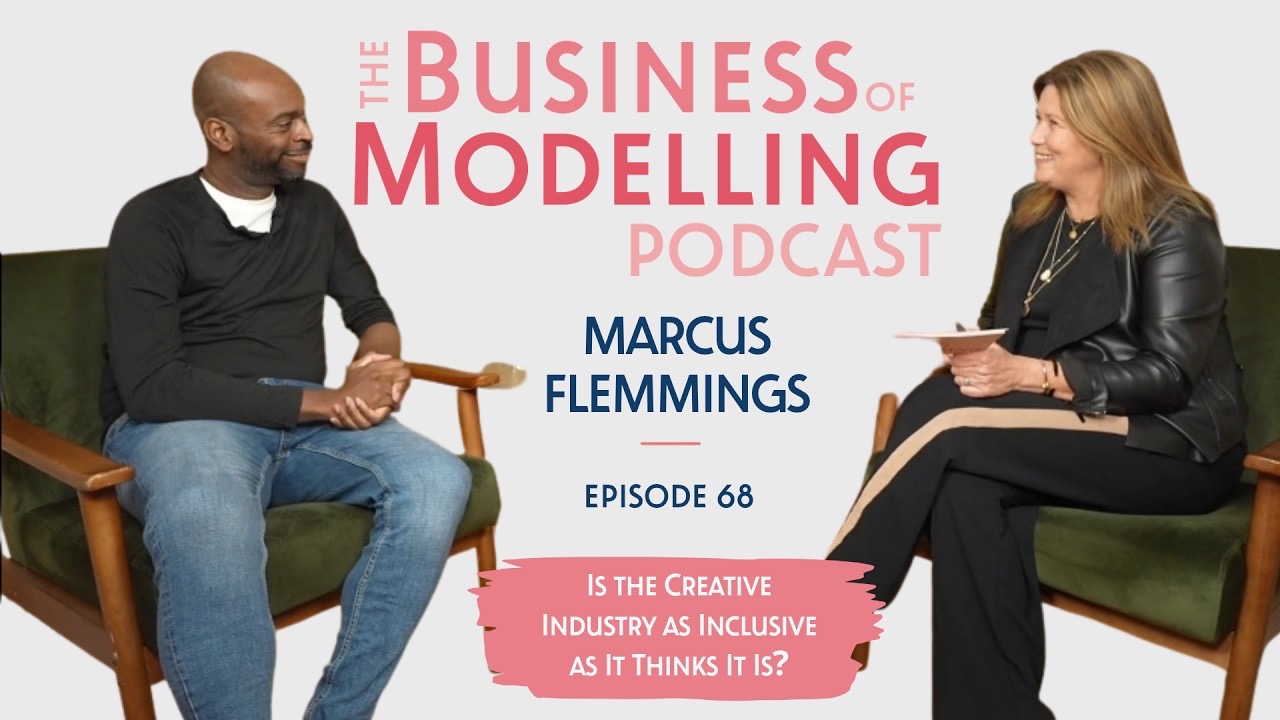
To get a deeper dive into our agent's thoughts on the industry, watch his interview here.